Schedule a Free Structural Evaluation!
wichita and nearby areas
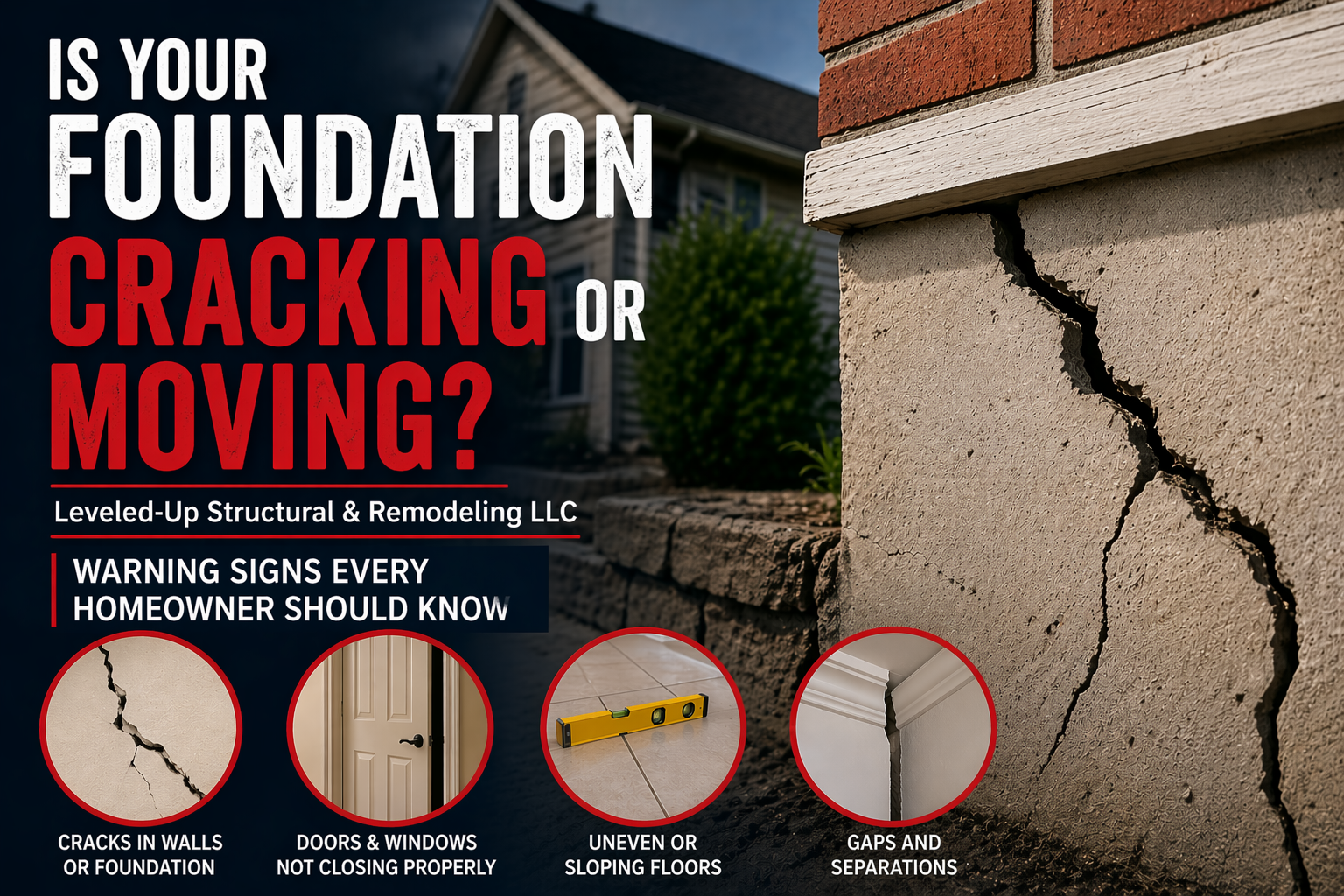
Is Your Foundation Cracking or Moving? Warning Signs Every Homeowner Should Know
Signs of foundation cracking and movement every homeowner should know. Learn when to schedule a professional evaluation in Wichita and surrounding areas.
FOUNDATION MOVEMENT
Leveled-Up Structural Team
4/22/20262 min read
Signs Every Homeowner Should Know
Recognizing early signs of movement can help prevent more serious issues over time. Many clients we’ve worked with have experienced cracking or shifting in different areas of their foundation. From minor cracks to more noticeable changes, these issues can raise understandable concerns. This guide is meant to help you recognize common warning signs and understand when it may be time to take a closer look.
Signs to Look For
Poor drainage or pooling water at or near foundation
Water intrusion
Cracks in drywall or interior walls
Uneven or Sloping Floors
Doors Not Operating Properly
Understanding Foundation Settlement
Water Intrusion or Pooling
Poor drainage around exterior
Wet baseboards or carpet
Damp or musty odor
Leaking from cracks at basement or crawlspace
Cracks in Walls or Foundation
Cracks are often one of the first visible signs.
Cracks in drywall or interior walls
Stair-step cracks in brick or block
Horizontal and vertical cracks along basement walls
Visible cracks at foundation
Cracks that appear to be increasing in size
Uneven or Sloping Floors
When the support systems beneath a house have movement, you may notice some of these signs.
Floors that slope or dip
A soft or “bouncy” feeling when walking
Doors Not Operating Properly
Structural changes can affect alignment within the home.
Doors that stick or rub
Doors that don’t latch properly
Gaps forming around frames
What Causes Foundations to Settle?
Several factors can contribute to foundation movement.
One of the most common is moisture fluctuation in the soil. When soil absorbs water, it expands, and when it dries, it contracts. Over time, this cycle can affect the support beneath a home.
Drainage and proper grade are the main factors when controlling the moisture content of the soil around your foundation. If water is not directed away properly, it can collect around the foundation and negatively impact its integrity.
Soil composition also plays a role. Different soil types, such as sandy or clay-based soils, respond differently to moisture, which can lead to uneven support conditions beneath the home.
When Is an Evaluation of Your Foundation a Good Idea?
Addressing concerns early can help prevent more extensive repairs and reduce the risk of further structural impact.
Stabilization is often worth considering when:
Movement appears to be ongoing
Cracks widen or new ones develop
Floors are uneven
Windows or doors have shifted out of alignment
Water intrusion into your basement or crawlspace
Stabilization focuses on improving support beneath the home and helping prevent future movement. The goal is to provide a stable, long-term solution based on site conditions and structural needs.
Get a Professional Opinion
We provide free evaluations for Wichita and nearby areas and are we are happy to evaluate your concerns, answer your questions, and help you determine the best path forward.
*Free quotes for Wichita and nearby areas.
Contact Us
Call
© Leveled-Up Structural and Remodeling LLC 2026. All rights reserved.
License # 12231